
Why do some calls convert while others end in seconds?
In a world of constant notifications, unopened emails, and unread chats, a phone call remains one of the most direct ways to connect with a customer.
Effective calls sound natural, contextual, and precise. AI can deliver that experience when it is trained and configured carefully.
This article shares lessons from thousands of AI calls across more than 15 countries. The findings come from observed contact rates, trust signals, conversion outcomes, and immediate rejection behavior.
Each principle can improve lead qualification, sales, and collections while creating phone experiences that feel natural to the customer.
The experience begins with the first thing a customer hears: the greeting.
Tip 1: Make the greeting local, natural, and culturally relevant
Immediate rejection occurs when a person ends the call during the opening seconds, before hearing its purpose. At Callbook, we track this behavior as an immediate rejection metric.
The greeting has a strong influence on this early response.
What the data shows
Across more than 50,000 calls in Latin America and Spain, generic greetings such as “Hello, good morning, this is a virtual assistant” produced rejection rates as high as 48% in outbound campaigns.
Adapting the greeting to the country and cultural context reduced drop-off during the first five seconds by as much as 35%.
A small change in the opening can determine whether the conversation moves forward.
How we implement localized greetings
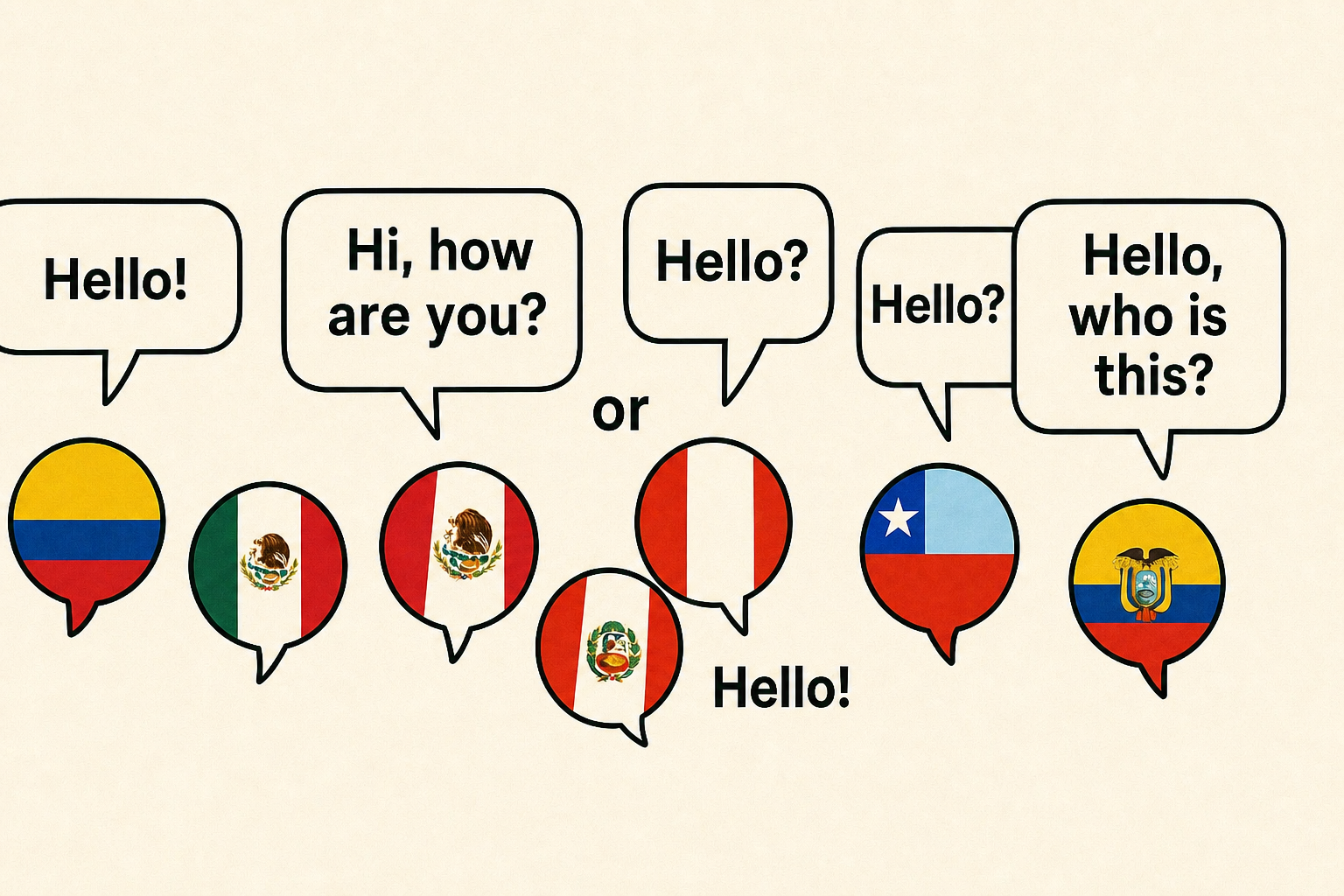
We train AI agents to begin with country-specific greetings:
🇨🇴 Colombia: “¡Aló!”
🇲🇽 Mexico: “¿Bueno?”
🇪🇸 Spain: “Hola, ¿qué tal?”
🇵🇪 Peru: “¿Diga?” or “¡Aló!”
🇨🇱 Chile: “¿Aló?”
🇦🇷 Argentina: “¿Hola, quién habla?”
🇪🇨 Ecuador: “¡Aló!”
We can also adapt the opening to age, time of day, and expected tone. A natural beginning creates trust and encourages the person to listen.
In collections and post-registration campaigns, localized greetings reduced immediate rejection from 42% to 27%, improving the effective conversation rate by 31%.
Tip 2: Personalize the greeting and the conversation
A strong greeting creates the opening. The rest of the conversation should maintain the same natural quality.
One of the most important qualities of an effective AI call is the ability to sound approachable and professional. This can include culturally appropriate expressions, local references, the correct pronunciation of a person’s name, and relevant regional context.
Compare these two openings:
“Good morning, how are you?”
And a localized version:
“Doña Ana, ¿cómo le va?” or “Gracias a Dios estamos bien, ¿y usted cómo va?”
Expressions like these, used naturally and with the right audience, increase the perception of warmth, trust, and genuine interest.
What does the data show?
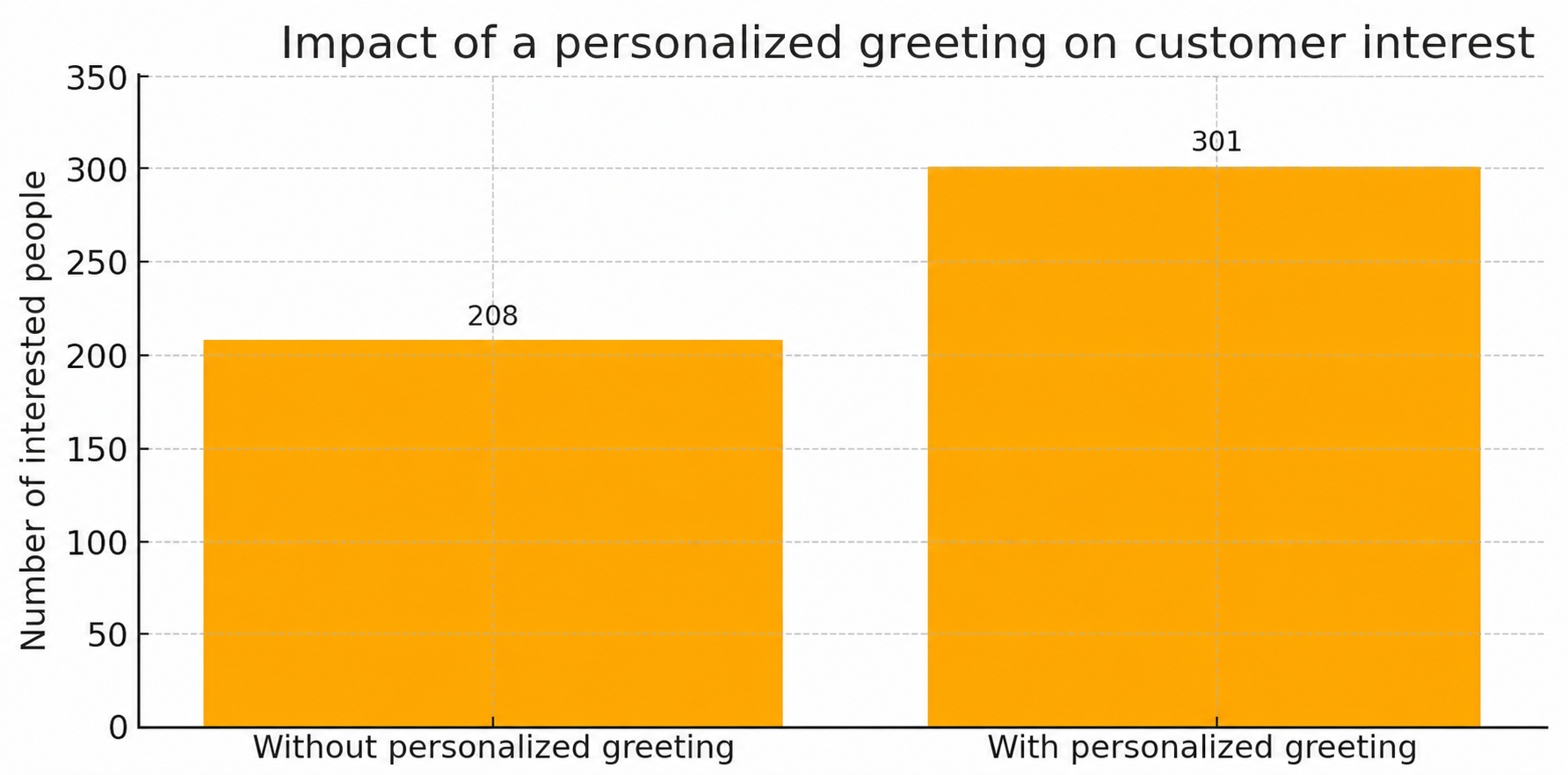
We ran an experiment with 1,300 automated calls in a commercial campaign. Both groups received an appropriate greeting. The body of the message changed:
- One group heard a generic, neutral script.
- The other heard a conversation adapted to local context, natural expressions, and a warmer tone.
Result
Among answered calls, the share of people interested in the product increased by 18% with the personalized conversation.
What did we learn?
An AI call can sound natural and efficient. That natural quality creates greater impact in sales, collections, and customer engagement.
Callbook personalizes greetings and trains voice models with real expressions, regional language, and tones suited to the audience. A personalized conversation informs and connects.
Tip 3: The voice influences the outcome
A strong script comes to life through the right intonation, rhythm, and emotion. These elements shape how the message connects.
A common error in AI calling campaigns is using one voice for every use case.
- A voice that sounds overly excited during a collections call can feel intrusive or insensitive.
- A voice that sounds monotonous during a sales call can reduce interest.
Match the tone to the objective:
- For sales, use an active, fluid voice with realistic enthusiasm.
- For collections, use a respectful, measured voice that remains natural.
- For lead qualification, use a curious and conversational voice.
What happens when the voice is mismatched?
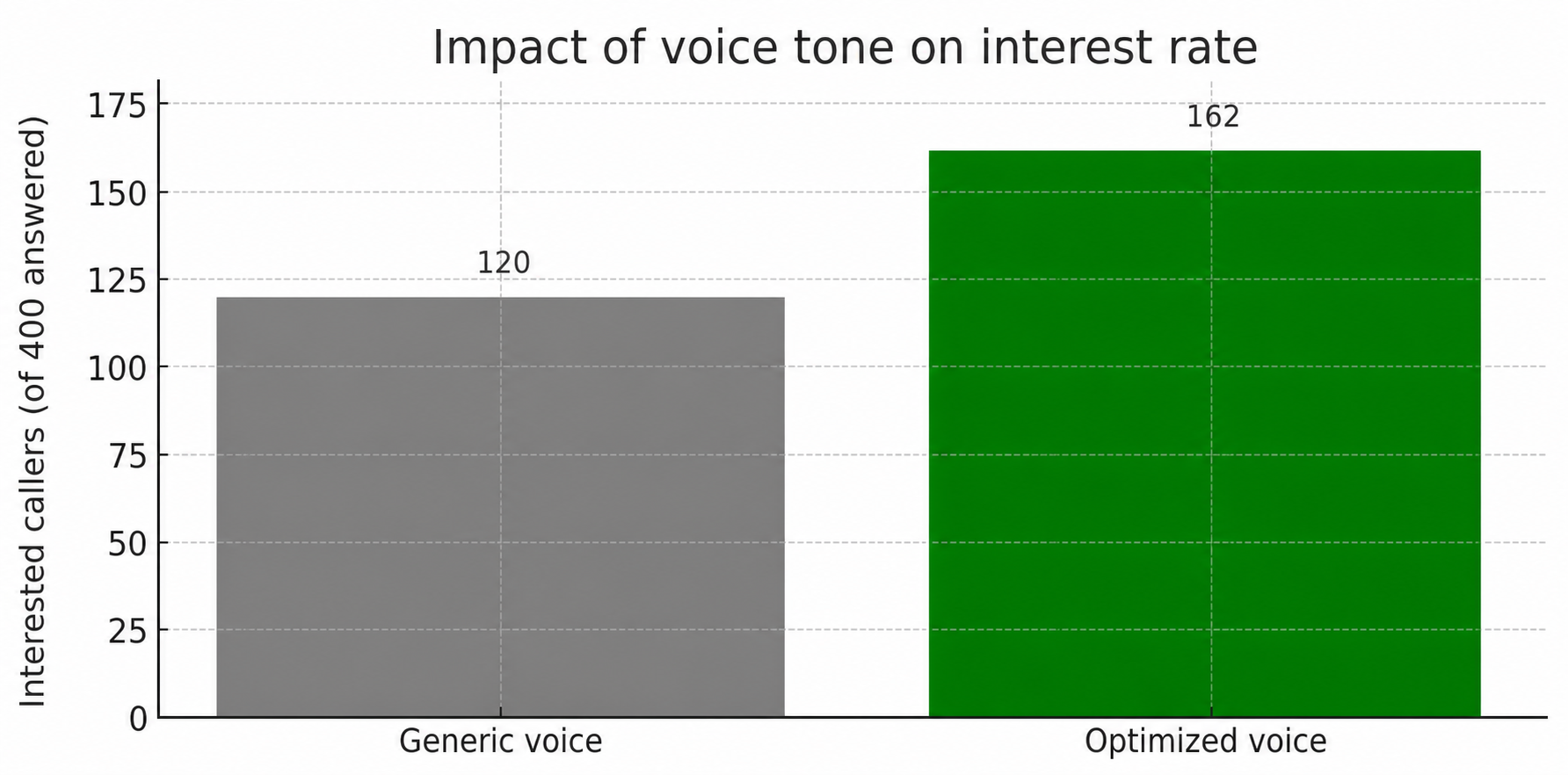
We compared 1,000 calls using a generic voice with 1,000 calls using a voice adapted to the sales use case.
Among the 40% of calls that were answered, the number of people who showed interest was:
📞 Generic voice: 120 people
📞 Optimized voice: 162 people
Adapting the voice increased interested contacts by 35%.
How do we choose the right voice?
Callbook trains assistants with voices adapted by accent, emotion, rhythm, and intonation. We also adjust speaking speed and pauses to match the moment in the conversation.
Tip 4: Pronunciation protects trust
In AI calls, phonetics shape credibility. Mispronouncing a brand, product, or key term immediately creates rejection and distrust.
When AI mispronounces a familiar word, such as the name of a bank or local retailer, the listener detects distance and uncertainty. Engagement with the call falls quickly.
How did we identify this pattern?
After analyzing thousands of calls, we found a clear relationship:
When AI mispronounces an important word during the opening seconds, the immediate hang-up rate increases by as much as 22%.
Examples of phonetic errors
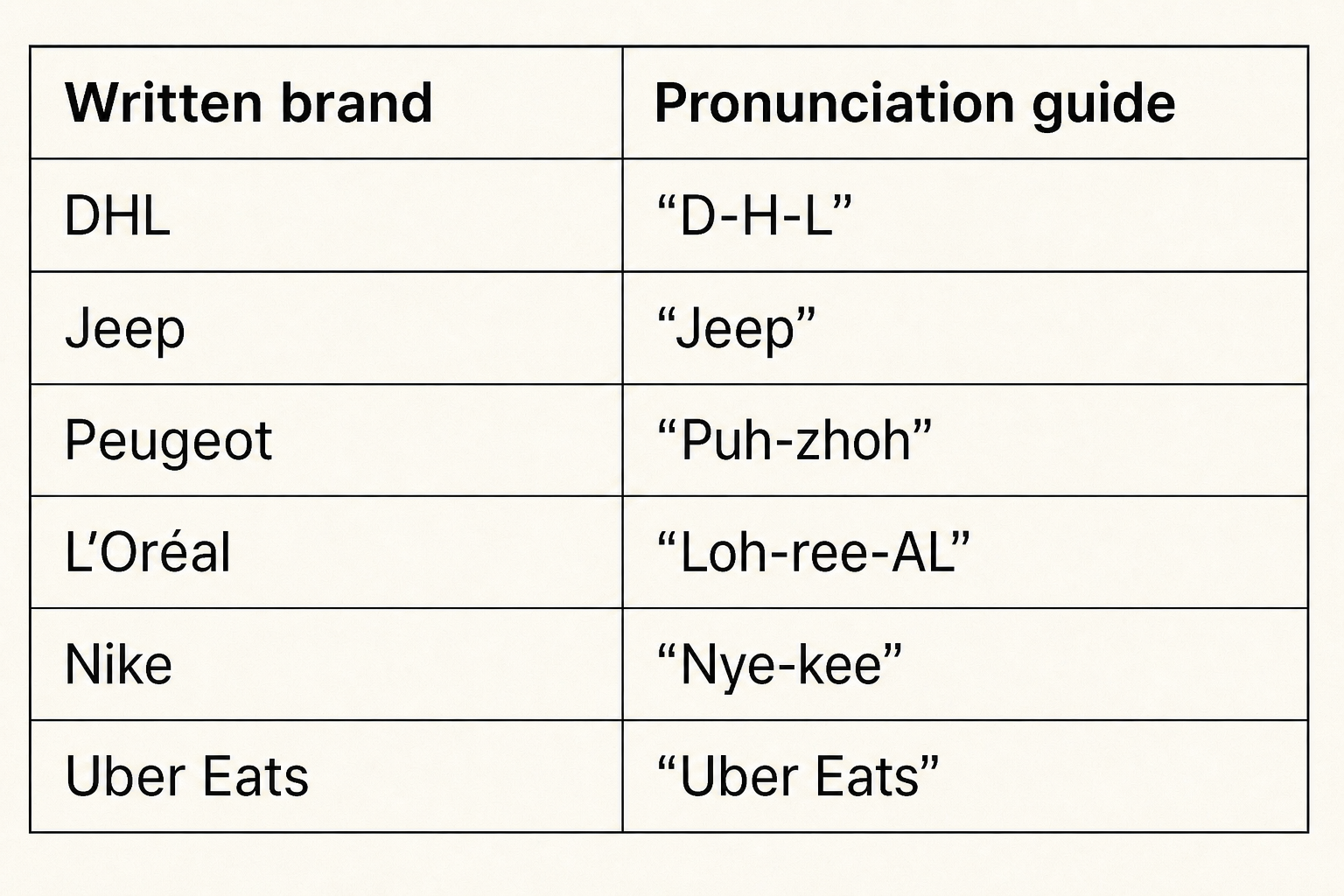
These brands commonly produce errors when a voice system reads plain text:
How we address pronunciation
Callbook includes a custom pronunciation module that maps exactly how each word or brand should sound, helping the AI speak like a local person.
This is especially useful for:
- Foreign brand names
- Uncommon products
- Abbreviations and acronyms
Speak to connect
An AI call should feel attentive, responsive, and fluent in the customer’s cultural, emotional, and commercial context.
Careful greetings, word choice, voice, and pronunciation improve performance and build trust at scale.
As automation becomes common, brands stand out through emotional intelligence in every interaction.
Turn every conversation into a better decision.
See how Callbook AI applies conversational intelligence to collections operations.
Let’s talk