
At Callbook AI, we have worked with many types of customers and use cases, from fintech companies that need to contact high-intent leads to creators automating conversations with their audiences.
We have run campaigns for education, ecommerce, collections, clinics, dropshipping, churches, and even amusement parks.
After more than one million AI calls across 15 countries, one principle became clear:
Every interaction should create value.
These are three key lessons we have validated with data and practical experience.
If you are considering automated calls, these lessons can save time, reduce frustration, and give your team ideas that work.
1. Redial with commercial intelligence
One of the most common mistakes in automated calling campaigns is stopping after the first attempt. Data from more than one million AI calls shows a clear pattern:
Strategic redialing multiplies the contact rate.
What does strategic mean?
We use AI to schedule follow-up attempts during periods with a higher probability of response, rotate the originating number, and space each attempt with a deliberate cooldown.
What does the data show?
In outbound campaigns, the average contact rate is around 30% on the first attempt. With five well-distributed follow-up attempts, we have reached a cumulative contact rate of 50% to 60%.
Contact rate by attempt and time of day
The following heat map shows contact rates by attempt number and time of day:
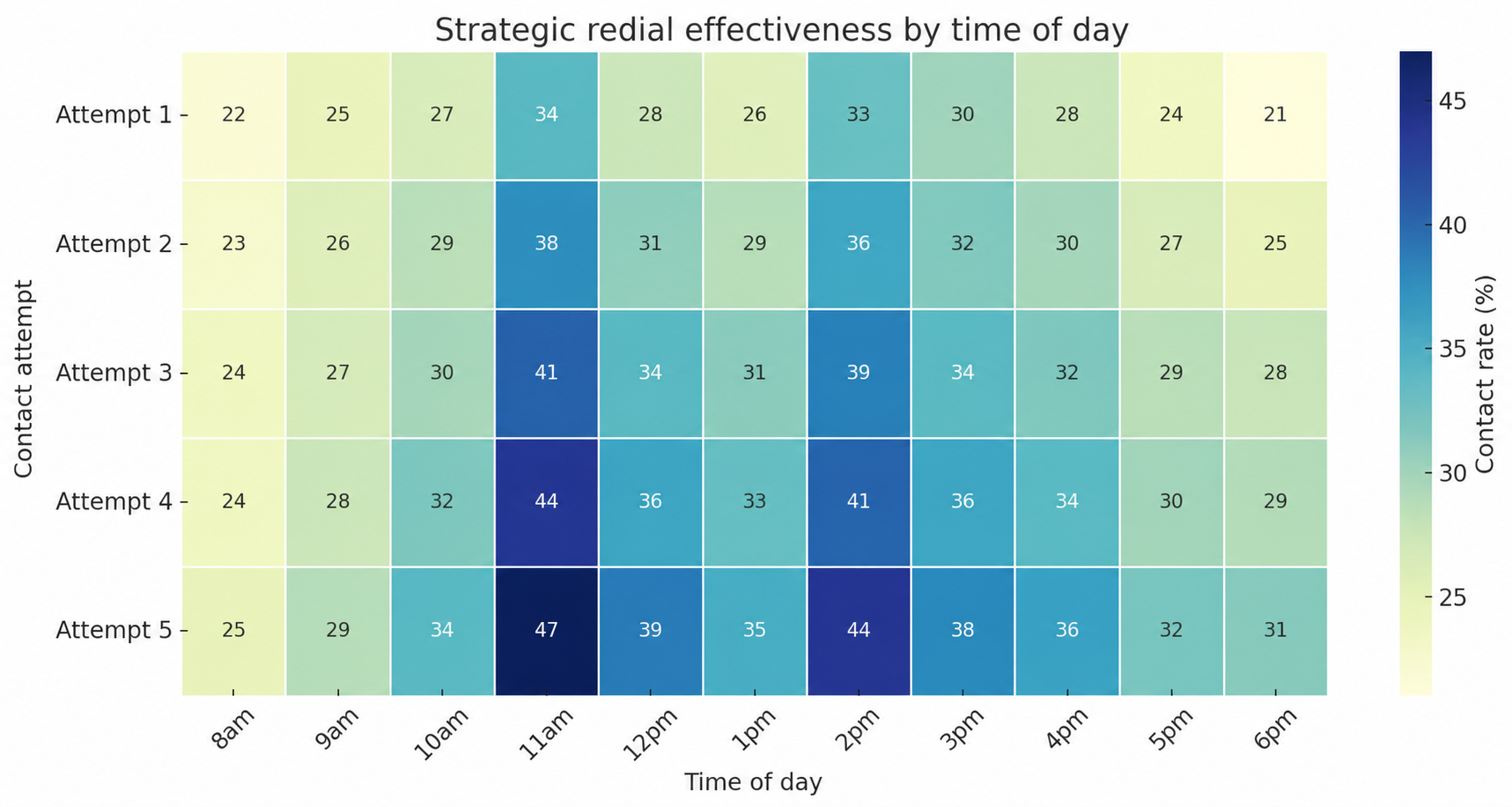
- 11:00 a.m., 2:00 p.m., and 5:00 to 6:00 p.m. are the strongest periods.
- These times align with familiar moments in the day: before lunch, after lunch, and the end of the workday.
- Each additional attempt can improve the rate when timing is respected and saturation is avoided.
Why does it work?
Calling performance depends on alignment with real human behavior. People respond differently at 8:00 a.m. and 5:00 p.m., especially after ignoring a previous attempt.
We return intelligently, when the person is more likely to be available and willing to answer.
2. Human call transfers work with the right context
One of the most valuable parts of an AI campaign is how the call ends. Many companies automate the beginning and create friction at the most important moment, when the person shows interest and needs human assistance.
A transfer without context creates three problems:
- The customer feels that the conversation has restarted.
- The agent does not know who they are speaking with.
- Continuity breaks and conversion often suffers.
Poorly qualified transfers also frustrate the human team.
How Callbook handles transfers
When Callbook AI identifies a qualified lead, the transfer includes the customer’s complete context through:
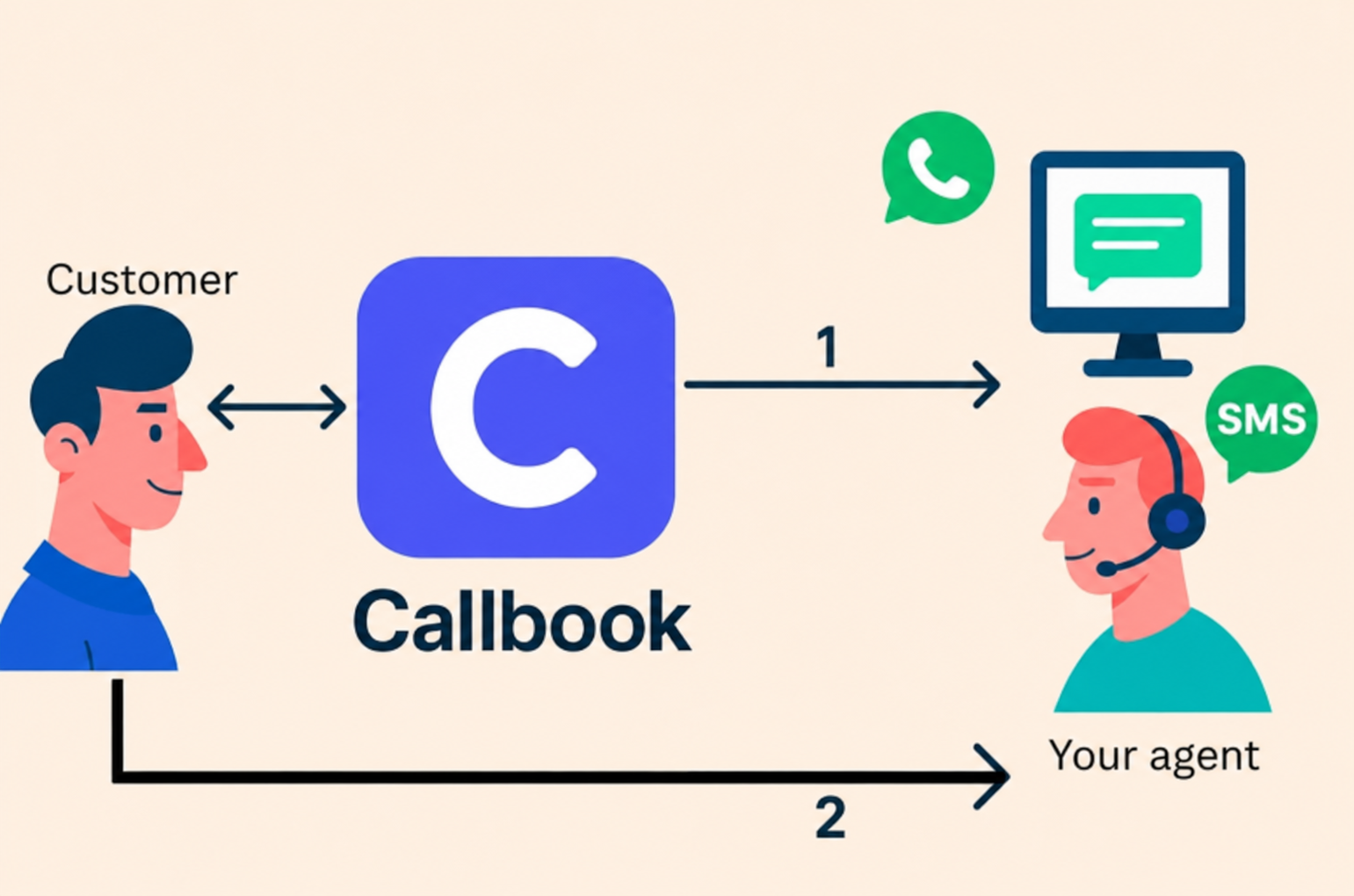
- An automated message in your CRM, WhatsApp, or SMS.
- A smooth transition within the same call, using language such as:
“I’ll connect you with someone on our team who already understands your interest.”
This audio shows a smooth transition between Callbook and a human team:
What does the data show?
In campaigns with medium to high transaction values, including credit, real estate, and B2B services, the qualification plus contextual transfer model:
- Increases close rates by 40%.
- Reduces average human handling time by more than 60%.
- Improves customer perception by preserving the conversation.
A real case of lower friction and greater productivity
A financial-services customer had 15 people on its outbound calling team. Eighty percent of calls were rejected, unanswered, or lacked real intent, creating frustration and low productivity.
We implemented our AI as an intelligent filter. The human team began receiving calls from leads who had already answered two or three questions and demonstrated purchase intent.
The impact:
- The team moved from 15 to 5 people while maintaining efficiency.
- Internal morale improved because agents spoke with interested people.
- Conversion per working hour increased by 55%.
Contextual transfers connect automation with human service.
A well-designed implementation prepares the conversation so people can focus on the work that matters most.
3. Early screening makes every call more effective
One of the strongest lessons from one million calls is simple:
Every call has a purpose: sell or learn.
What is screening?
Screening is an early intelligence layer that classifies each contact. It works like radar, identifying who is ready to move forward and the reason behind each response.
A second wave can then launch campaigns tailored to each segment. This is where conversion improves.
Case study: restaurants joining a delivery platform
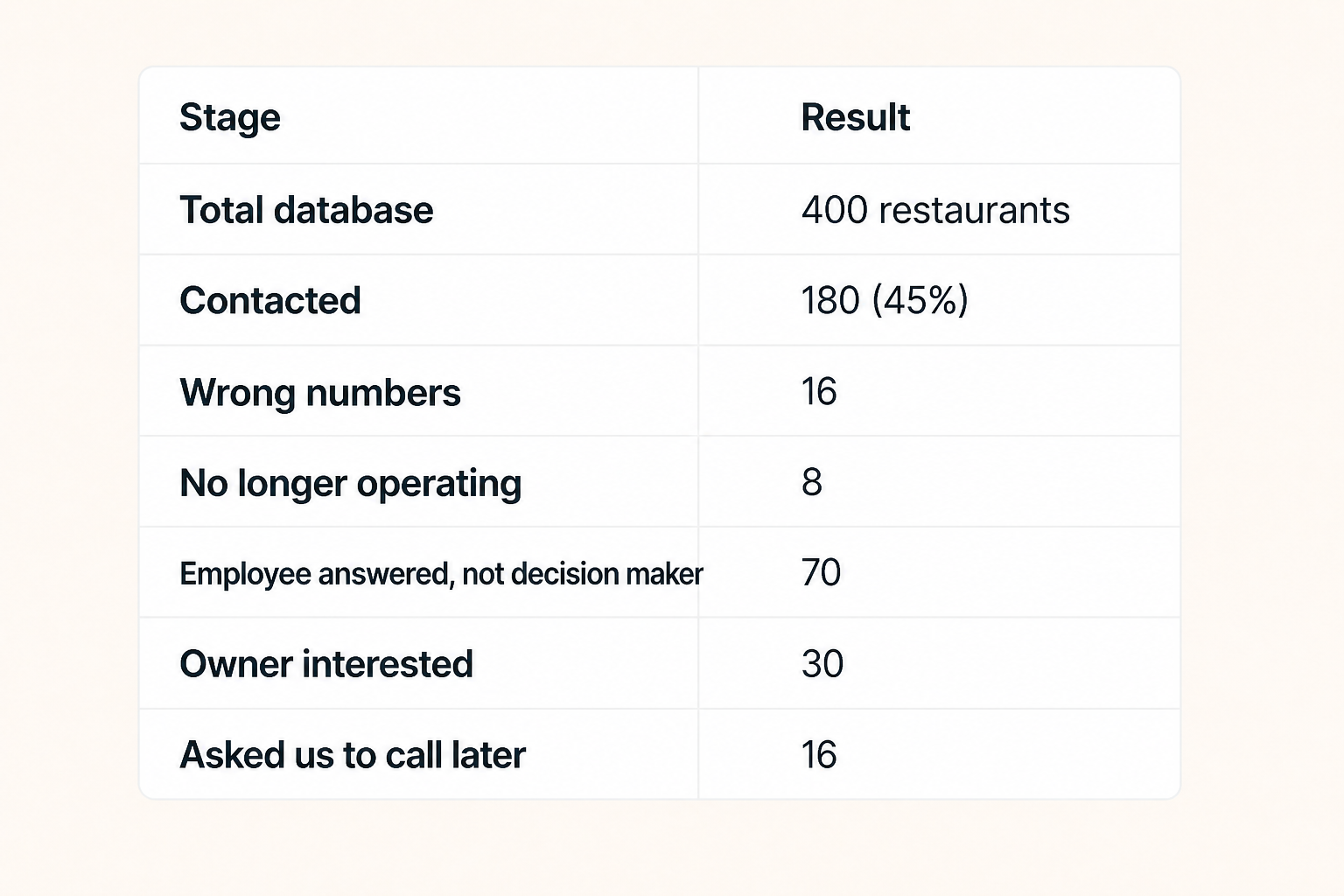
We received a list of 400 restaurant phone numbers. The goal was to enroll them in a new service. The first screening campaign produced the following results:
How did we use those signals?
The remaining 150 contacts also produced valuable signals:
- Employees without decision authority told us when the manager would be available.
- Restaurants with a poor prior experience received a different approach.
- People who requested a later call received it at the agreed time.
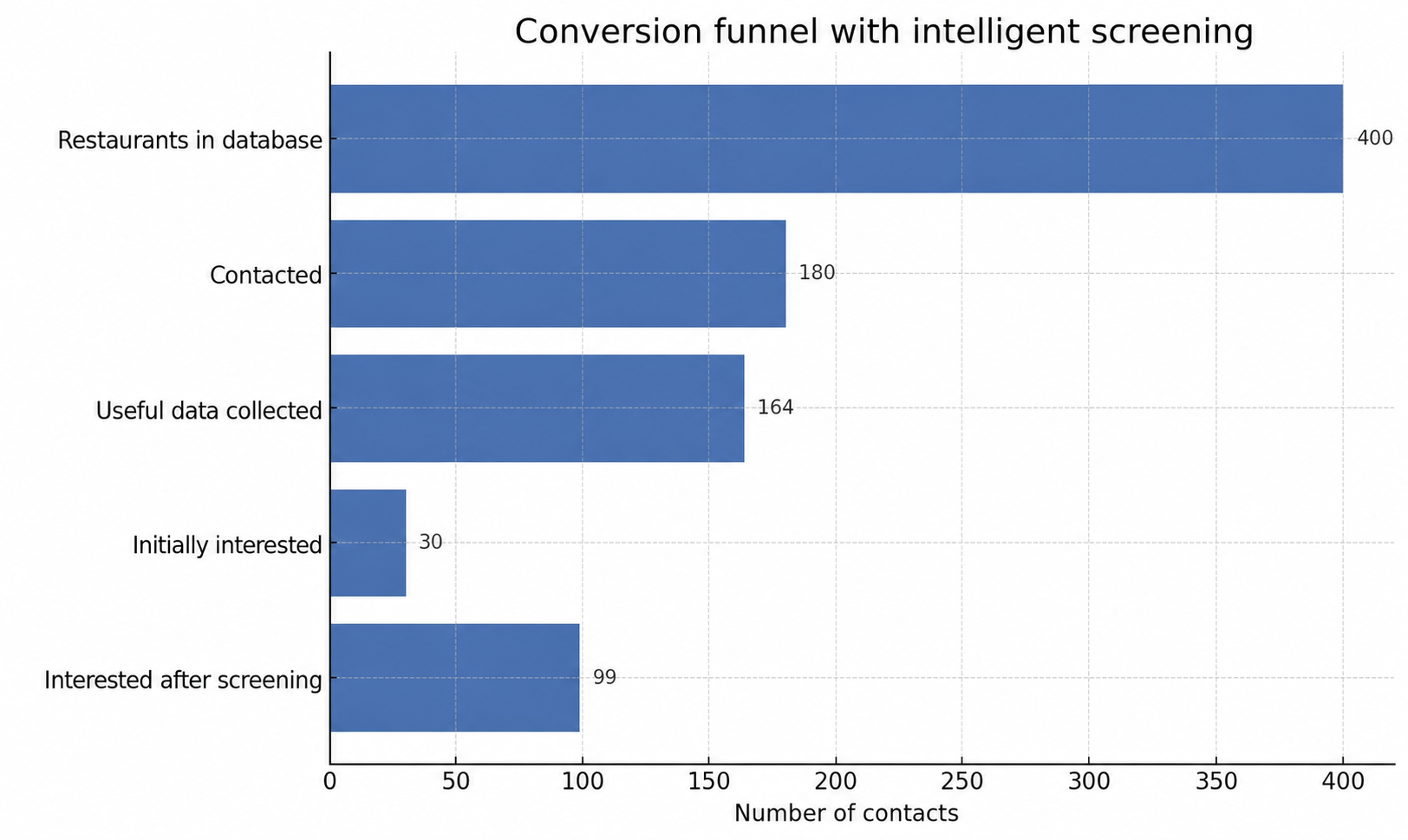
Final result after segmentation and relaunch
- Initially interested: 30 / 180 = 16.6%
- Interested after the second iteration: 99 / 180 = 55%
Qualified leads increased by more than 230% with the same contact base through better listening and classification.
Key insight
Early screening makes each subsequent call more personalized, precise, and effective.
A better strategy makes every call count
After more than one million AI calls, we have learned that strong results combine technology with a deliberate operating strategy.
- Call again at the right time, when people are available and receptive.
- Give the human team the right context to close with confidence and speed.
- Screen, listen, classify, and refine the message for each segment.
These structures work at scale while respecting the customer experience.
We are building AI that speaks and understands when and how to act.
Turn every conversation into a better decision.
See how Callbook AI applies conversational intelligence to collections operations.
Let’s talk